
How to Track Pig Health and Growth with the Right Tools
Keeping pigs healthy and growing well is one of the most important parts of running a successful pig farm. When pigs are in good condition, they gain weight more efficiently, respond better to feeding programs, and are more likely to reach market value on time. When health problems are missed or growth is not monitored properly, the result is usually the opposite. You may deal with slow weight gain, higher treatment costs, more deaths, wasted feed, and lower returns from your effort.
Many farmers can tell when something is obviously wrong, but the real challenge is noticing smaller changes before they become bigger problems. A pig does not need to be close to death before it starts losing performance. It may begin with reduced feed intake, less activity, coughing, poor skin condition, or slower growth than the rest of the group. If you are not tracking these things properly, valuable time is lost and the farm pays the price. That is why using the right tools to monitor pig health and growth is not just a technical improvement. It is a practical way to make better decisions every day.
Why health and growth should be tracked together
Pig health and pig growth are closely connected. A pig that is not healthy will rarely grow as expected, and a pig that is not growing properly often has an underlying issue that needs attention. When you track only health without looking at growth, you may miss the production impact of disease or stress. When you track only growth without paying attention to health, you may overlook the reasons why some pigs are underperforming.
Looking at both together gives you a fuller understanding of what is happening on the farm. A drop in growth rate may point to poor feed intake, infection, overcrowding, environmental stress, or management problems. A rise in treatment records may reveal a health pattern that is already affecting performance, even if the pigs do not yet appear severely ill. When you connect these two areas, your monitoring becomes more useful because it helps you understand not just what is happening, but why it is happening.
This also helps you act earlier. Instead of waiting until poor results show up at sale time, you can see warning signs during the production process and respond while there is still time to protect performance. That is where good tracking becomes valuable. It gives you the chance to correct issues before they become costly.
The health signs you should pay close attention to
Tracking pig health starts with knowing what to observe consistently. One of the most important signs is appetite. A pig that suddenly eats less or shows reduced interest in feed may be dealing with illness, discomfort, stress, or environmental problems. Changes in appetite are often among the earliest warning signs, and they should never be ignored.
Respiratory signs also deserve close attention. Coughing, sneezing, fast breathing, or labored breathing can all indicate health problems that may spread quickly if not handled early. On many farms, these signs are dismissed at first because pigs may still be standing and moving, but by the time breathing problems become obvious across a whole group, the damage may already be affecting growth and overall performance.
You should also monitor diarrhea, injuries, lameness, swelling, skin condition, and abnormal behavior. A pig that isolates itself, appears dull, struggles to stand, or moves less than usual is often telling you that something is wrong. These signals may seem small when viewed individually, but together they form a picture of herd condition that should guide your management decisions.
Treatment records are another important part of health tracking. It is not enough to remember that a pig was once treated. You should know when it was treated, for what reason, what medication was used, and whether the pig recovered as expected. Without this kind of record, it becomes difficult to identify recurring problems or evaluate whether your interventions are actually working.
Mortality patterns also reveal a great deal about farm health. A single death may have one explanation, but repeated deaths in a group, stage, or housing area usually point to a broader issue that needs investigation. Good health tracking helps you move beyond reacting to visible illness and begin managing health patterns more seriously.
The growth indicators that show whether pigs are performing well
Growth tracking gives you a practical way to judge whether pigs are developing as they should. One of the most basic indicators is weight over time. Whether you are working with piglets, growers, or finishers, regular weight checks help you see whether animals are progressing according to expectations. If pigs are falling behind, the earlier you notice it, the easier it is to investigate and correct the cause.
Birth weight and weaning weight are important starting points because they influence later performance. Piglets that begin life weak or underweight are more likely to struggle if they do not receive proper support early. By following growth from one stage to the next, you gain better insight into how well your management is supporting development.
Average daily gain is another useful measure because it shows how efficiently pigs are converting time into body growth. If this rate begins to decline, it can point to nutritional issues, disease pressure, poor housing conditions, or stress within the group. Growth is never just a number. It reflects the quality of the whole production environment.
Feed intake should also be considered alongside weight gain. Pigs may be consuming feed but still growing below expectation, which suggests poor feed efficiency or another limiting problem. On the other hand, reduced feed intake can quickly explain slow growth if you are monitoring it closely. When growth data and feeding data are considered together, your understanding becomes much more accurate.
It is also helpful to compare different pens, batches, or age groups. Sometimes a farm-wide problem is not the issue. Instead, one section may be performing poorly because of ventilation, stocking density, water access, or disease exposure. Growth records help you identify these differences so that management can be adjusted where it is actually needed.
Why many farmers struggle to monitor health and growth properly
The difficulty is often not a lack of effort. Most pig farmers care deeply about the condition of their animals and want to maintain strong performance. The problem is that farm work is busy, repetitive, and demanding. When many tasks compete for attention, recordkeeping and structured tracking are often delayed or handled inconsistently. It becomes easy to rely on memory, quick observation, or scattered notes that are difficult to review later.
This creates a situation where problems may be noticed only after they have become serious. A farmer may sense that pigs are not doing as well as before, but without reliable records it is hard to prove when the change started, which group was affected first, or what event may have triggered it. In that kind of situation, decision-making becomes slower and less precise.
Another common issue is inconsistency. One worker may note treatment details carefully while another may not. One batch may be weighed properly while another is simply estimated. Over time, this makes comparison difficult and reduces the usefulness of your records. Good tracking depends not only on collecting information, but on collecting it in a consistent and organized way.
How poor tracking affects the farm
When health and growth are not tracked properly, the losses are often greater than they first appear. You may see the obvious consequences, such as sick pigs, slow weight gain, or occasional deaths, but there are also hidden losses that build up over time. Feed may be wasted on animals that are not performing well. Medication may be used repeatedly without solving the root problem. Market timing may be affected because pigs are not reaching target weight when expected.
Poor tracking also makes it harder to evaluate what is actually helping the farm. You may change feed, housing, treatment routines, or management practices, but if you are not measuring performance before and after those changes, you cannot easily tell whether things improved or simply changed. This weakens your ability to learn from experience and make confident decisions.
There is also the issue of delayed response. If a health problem is only recognized after it has spread, treatment becomes more expensive and results become less predictable. If growth problems are only noticed when pigs are ready for sale, the chance to improve that batch has already passed. Tracking gives you control because it shortens the distance between a problem starting and you responding to it.
Why recordkeeping remains one of the most valuable tools on the farm
Strong recordkeeping supports every part of health and growth management. It allows you to see the history of an individual pig, a pen, or a whole batch. You can identify when symptoms began, what treatment was given, how weight changed over time, and whether the pig or group recovered as expected. This makes it easier to evaluate current issues and plan future action.
Records also help you identify trends that are difficult to notice from daily observation alone. You may find that certain health issues are recurring in a particular housing unit, that weight gain drops during a specific season, or that some groups consistently perform worse than others. These patterns are exactly the kind of information that helps you improve farm management in a meaningful way.
On a growing farm, recordkeeping also improves communication. If more than one person is involved in caring for the pigs, everyone needs access to the same information. Without clear records, important details can be forgotten or misunderstood. With organized records, care becomes more consistent and decision-making becomes less dependent on guesswork.
What the right tools should help you do
The right tools should make tracking easier, not more complicated. At a practical level, they should help you identify pigs clearly, record treatments accurately, monitor weight or growth progress, and keep health history in one accessible place. They should also help you review information in a way that supports action rather than simply storing data.
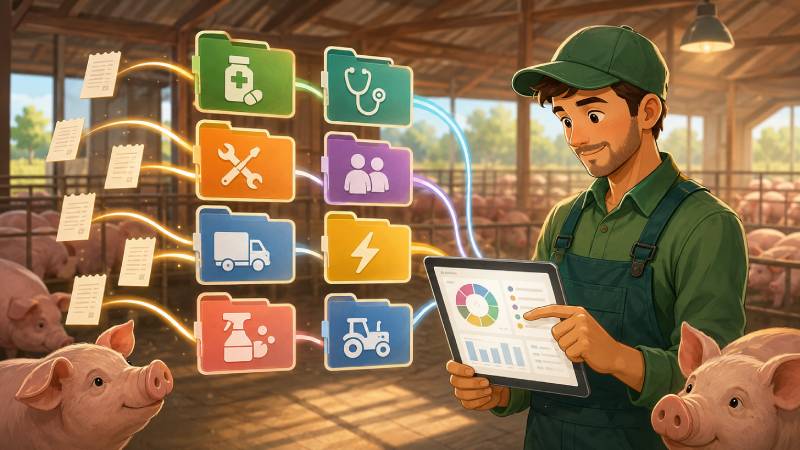
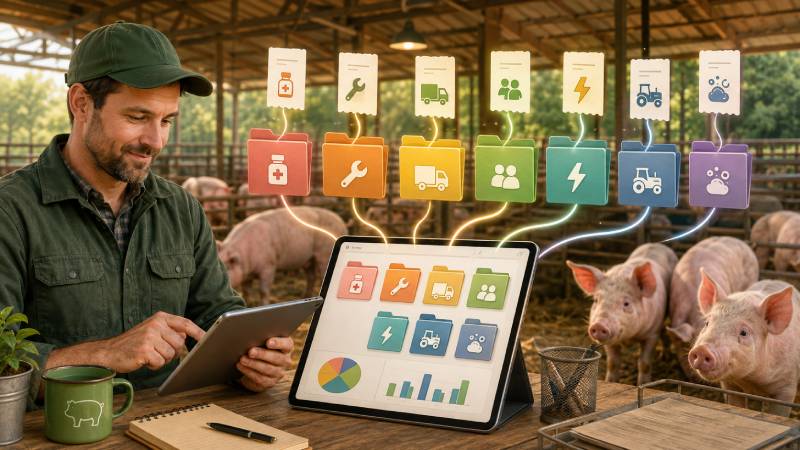
A good system should allow you to check which pigs have been treated, which ones are underperforming, and whether a health issue is affecting a broader group. It should also make it easier to track mortality, monitor growth performance, and keep production records organized without needing to search through paper notes or scattered files. This matters because speed and clarity are essential when you are managing a working pig farm.
You do not need tools for the sake of technology alone. You need tools that reduce missed information, support timely action, and help you build a clearer understanding of herd performance. The best tools do exactly that. They turn day-to-day observations into useful management information.
How digital tools improve health and growth management
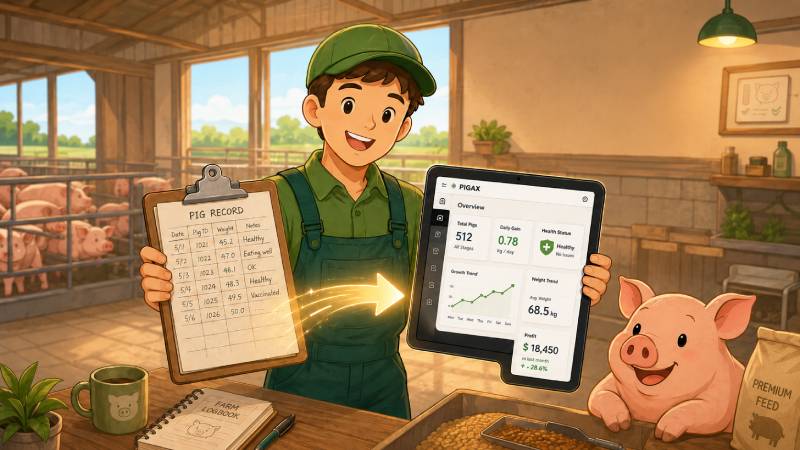
As farms become busier, digital tools can make a major difference in how information is handled. Instead of writing notes in different places or trying to remember treatment details later, you can record events in a structured way and access them when needed. This makes your records more complete and more useful over time.
Digital systems also make it easier to compare results. You can review health incidents, check growth patterns, follow treatment history, and identify problem areas more quickly than with manual methods alone. This saves time, but more importantly, it improves the quality of your decisions. When information is clear and available, it becomes easier to act early and manage consistently.
For pig farmers, this can be especially valuable because health and growth issues often develop gradually. A good system helps you notice those gradual changes before they become serious setbacks. It also gives you a stronger foundation for improving farm efficiency, because your decisions are based on actual performance rather than rough impressions.
Better tracking leads to better results
If you want healthier pigs and stronger growth, you need more than hard work and routine observation. You need a system that helps you track what matters, review it clearly, and respond in time. Health and growth are too important to be managed only by memory or instinct, especially when small problems can turn into expensive losses.
When you use the right tools to monitor pig health and growth, you give yourself a better chance to prevent disease spread, improve weight gain, reduce avoidable losses, and manage the farm with more confidence. You are no longer just reacting to what you see today. You are building a more informed and more productive way to manage the future performance of your pigs.