
The Complete Guide to Managing a Profitable Pig Farm with Pigax
 Profit in pig farming does not come only from owning many pigs. A farm can have many animals and still struggle if breeding is poorly managed, feed costs are uncontrolled, mortality is high, treatments are delayed, or expenses are not properly tracked.
A profitable pig farm needs visibility, discipline, planning, and timely action. Farmers need to know what is happening in the farm, what needs attention, what is costing money, and which activities are producing results.
This is why Pigax is valuable.
Pigax is an extensive pig farm management tool designed to help farmers manage their pigs, breeding activities, farrowing, piglets, feed, health, mortality, income, expenses, workers, notifications, reminders, and reports from one organised platform. It helps farmers run their farms with more control and better information.
For pig farmers who want to improve productivity and profitability, Pigax provides the structure needed to manage the farm as a serious business.
Understanding your pig population
A farmer should always know the true state of the pig population. This includes the number of piglets, growers, finishers, sows, boars, pregnant sows, sick pigs, sold pigs, and deceased pigs.
Without clear population management, it becomes difficult to plan properly. The farmer may not know how many animals need feed, how many pigs are ready for sale, how many sows are productive, or how many piglets are expected in the coming weeks.
Pigax helps farmers organise pig population data clearly. Each animal can be managed with important details such as identification, breed, sex, age, weight, status, and production role. This gives the farmer a clear view of the herd and helps with better planning.
Good pig population management also helps with cost control. If the farmer knows how many pigs are in each category, it becomes easier to estimate feed needs, plan housing, monitor growth, and prepare for sales.
Managing breeding for better productivity
Breeding is one of the strongest drivers of profitability in pig farming. If breeding is not properly managed, the farm can lose production opportunities. Missed mating periods, poor pregnancy follow-up, weak sow performance, and poor litter outcomes can all reduce income.
Pigax helps farmers manage breeding activities more professionally. Farmers can track mating records, pregnancy status, expected farrowing dates, sow performance, boar usage, and reproductive history. This gives the farmer a better understanding of how the breeding program is performing.
For example, a farmer can identify sows that consistently produce strong litters and those that repeatedly perform poorly. This helps with better selection, culling decisions, and future breeding plans.
Breeding management also depends heavily on timing. This is where Pigax notifications and reminders become important. A farmer can be reminded about important reproductive events so that action is taken at the right time. This helps reduce delays and improves the consistency of farm operations.
Timely task implementation through notifications and reminders
One of the biggest causes of poor farm performance is delayed action. Many farmers know what should be done, but the problem is that tasks are forgotten, postponed, or done too late.
In pig farming, late action can be costly.
If a pregnant sow is not monitored before farrowing, piglet losses may increase. If a treatment follow-up is missed, a sick animal may get worse. If piglets are not weaned at the right time, it can affect growth planning. If feed stock is not checked early, the farm may face shortages. If expenses are not recorded, the farmer may lose track of profitability.
Pigax helps farmers become more proactive through notifications and reminders. These reminders help farmers remember important tasks and complete them on time.
Pigax reminders can support activities such as breeding follow-up, pregnancy checks, farrowing preparation, weaning, treatment follow-ups, feed stock checks, mortality review, sales planning, expense updates, and general farm tasks.
This is important because a farm management system should not only store information. It should help the farmer act. Pigax reminders turn farm data into daily management guidance.
For busy farmers, this can be one of the most useful features. It reduces dependence on memory and helps create a more disciplined farming routine. For farms with workers, reminders also help ensure that tasks are clear, timely, and easier to monitor.
Reducing losses through better health management
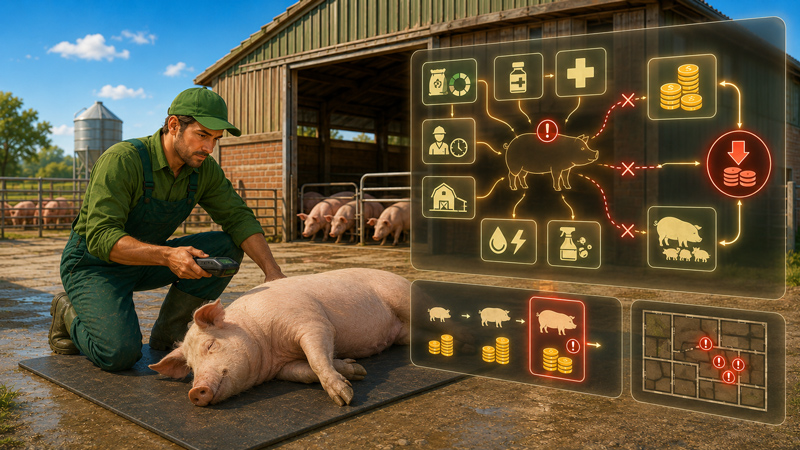
Health problems can quickly reduce profit. Sick pigs may grow slowly, require medication, consume resources, infect other animals, or die. If health issues are not properly recorded, the farmer may fail to understand what is really happening.
Pigax helps farmers track animal health by recording sickness, symptoms, treatments, medication, recovery progress, and mortality cases. This creates a useful health history that can guide better decisions.
For example, if the same type of illness appears repeatedly, the farmer can investigate possible causes. It may be related to housing, hygiene, feeding, weather, disease exposure, or management practices. Without records, these patterns may be missed.
Notifications and reminders are very important in health management. Some treatments must be repeated after a specific number of days. Some animals must be checked again after medication. Some farm health activities must happen on schedule. Pigax helps ensure that these follow-ups are not forgotten.
Better health tracking helps farmers reduce avoidable losses and improve animal welfare.
Managing farrowing and piglet survival
Piglet survival has a major impact on farm profitability. A sow may produce a litter, but if many piglets die before weaning, the farm loses income potential. This makes farrowing and piglet management very important.
Pigax helps farmers record farrowing details such as farrowing date, litter size, live births, stillbirths, weak piglets, piglet mortality, and weaning results. These records help the farmer understand how each sow performs and how well piglets are surviving.
This information is useful for long-term decision-making. If a sow consistently has poor farrowing outcomes, the farmer can review her performance. If piglet deaths are increasing, the farmer can investigate the cause and improve management practices.
Pigax reminders can also help farmers prepare for farrowing before it happens. A reminder before the expected farrowing date gives the farmer time to prepare the farrowing area, arrange supplies, monitor the sow, and reduce last-minute stress.
After farrowing, reminders can help with piglet checks, weaning schedules, and follow-up care. This supports better organisation during one of the most sensitive periods in pig farming.
Controlling feed costs
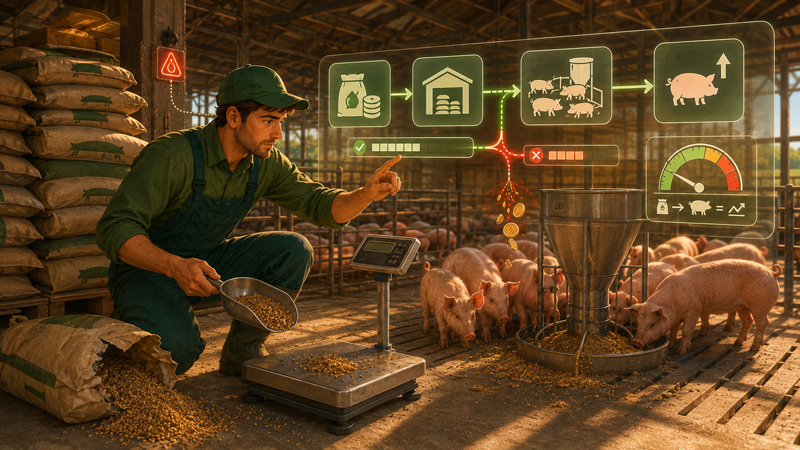
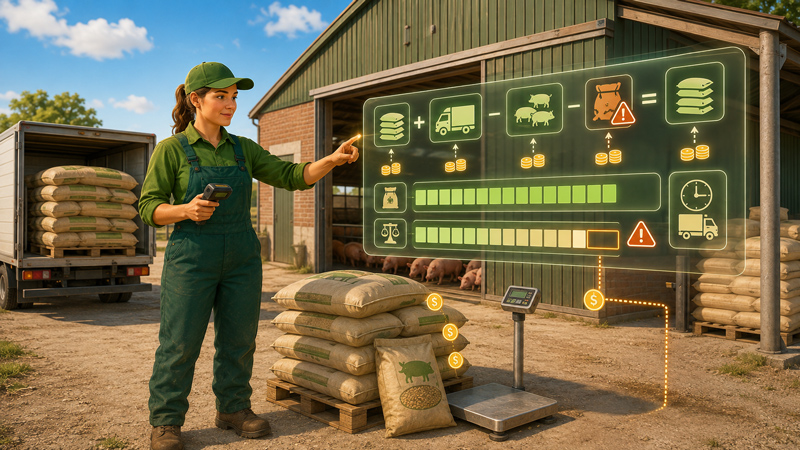
Feed is often the largest cost in pig farming. If feed is not managed properly, profit can disappear quickly. Overfeeding, underfeeding, feed waste, poor stock monitoring, and unplanned purchases can all affect the financial health of the farm.
Pigax helps farmers manage feed plans, feed usage, and feed inventory. This gives the farmer better control over how feed is used and how much is available.
Feed tracking helps farmers understand whether animals are consuming feed as expected. It also helps connect feeding practices with growth and production outcomes. When farmers understand feed usage better, they can make more informed decisions about feeding plans, stock purchases, and cost reduction.
Notifications and reminders can support feed management by reminding farmers to check feed stock, update usage, or take action before feed runs out. This helps prevent emergency purchases and poor feeding continuity.
Good feed management is one of the most direct ways to improve profitability.
Tracking income and expenses
A pig farm can look active and still fail financially. Farmers may be buying feed, treating animals, paying workers, and selling pigs, but without proper financial tracking, they may not know whether the farm is truly profitable.
Pigax helps farmers record income and expenses. This may include pig sales, feed purchases, medication, labour, equipment, farm maintenance, transport, and other operating costs.
When income and expenses are tracked properly, the farmer can understand the financial performance of the farm. They can see where money is going, which costs are increasing, and whether sales are enough to support growth.
This is important because profitability depends on more than production. It also depends on cost control. Pigax gives farmers a clearer view of the business side of pig farming.
Using reports to make better decisions
Reports help farmers move from assumptions to evidence-based decisions. Without reports, it can be difficult to know whether the farm is improving or declining.
Pigax reports can help farmers review important areas such as pig population, breeding performance, farrowing outcomes, mortality, feed usage, income, expenses, and farm growth. These insights help farmers understand what is working and what needs attention.
For example, a report may show that mortality is increasing in a specific group. It may show that feed costs are rising faster than income. It may show that some sows are more productive than others. It may also show whether the farm is growing in the right direction.
This kind of insight helps farmers make better business decisions. Instead of reacting only when problems become obvious, farmers can identify trends earlier and take corrective action.
Managing multiple farms, teams, and roles
As a farm grows, management becomes more complex. The owner may need to manage workers, multiple farm sections, different responsibilities, and more animals. Without a system, it becomes difficult to maintain control.
Pigax supports better organisation for farms that need to manage teams and responsibilities. It helps create a more structured way of working, where farm information is easier to access and activities are easier to follow.
Notifications and reminders also improve team management. Workers can be reminded of important tasks, and managers can have better visibility into what needs to be done. This reduces confusion and helps the farm operate more consistently.
For growing farms, this kind of structure is essential.
Building a more professional and scalable pig farm
A profitable farm needs systems. It cannot depend only on memory, guesswork, or informal communication. As the farm grows, the farmer needs better organisation, better records, better planning, and better reporting.
Pigax helps farmers build a more professional management process. It supports day-to-day farm activities while also giving farmers the information they need for long-term planning.
This is useful for farmers who want to expand, improve productivity, reduce losses, attract partners, or manage workers more effectively. A farm that is well-organised is easier to scale because the farmer has clearer control over animals, tasks, costs, and performance.
Conclusion
Managing a profitable pig farm requires more than hard work. It requires timely action, clear information, proper planning, cost control, and consistent follow-up.
Pigax helps farmers manage these areas from one platform. It supports pig population tracking, breeding, farrowing, piglet care, feed management, health records, mortality tracking, finances, reports, workers, notifications, and reminders.
The notification and reminder system is especially important because it helps farmers act on time. It reduces missed tasks and supports more organised farm operations.
For farmers who want to manage their pig farm as a serious and profitable business, Pigax provides the tools needed to stay in control and make better decisions.