
Timed Insemination in Pigs: Better Results Start With Better Records
 Reducing the number of inseminations per sow can save semen and labour. But a cheaper breeding event does not automatically produce a more profitable litter.
The real opportunity in timed insemination is to create a breeding programme that is easier to organise, consistently executed and measured through to farrowing. Achieving that requires more than reproductive technology. It requires suitable animals, a clear working protocol and reliable farm records.
A successful breeding programme is measured by the piglets it produces and the resources it consumes—not simply by how many inseminations it eliminates.
Predictable timing makes consistent execution more important
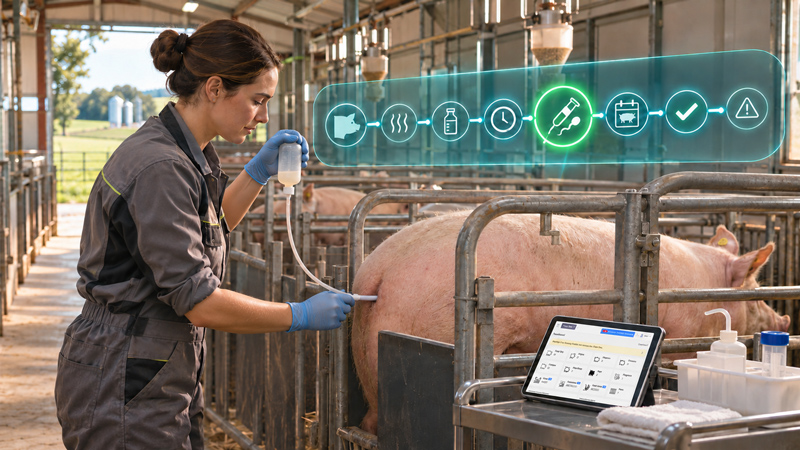
Timed insemination aims to align insemination with a more predictable ovulation period. Where appropriate, this can reduce repeated breeding work and help farms organise staff and semen requirements.
However, a planned breeding schedule creates a responsibility: the team must follow it accurately. Animal identification, treatment records, insemination timing and staff handovers all become important parts of execution.
If one person administers a reproductive product and another performs the insemination, both need access to an accurate record of what happened. An approximate time remembered at the end of a shift is a weak foundation for a time-sensitive programme.
Before adopting timed insemination, agree on the protocol with your veterinarian, follow the applicable product label and decide how every required action will be documented.
Herd readiness comes before scheduling
A group of sows weaned on the same day is convenient to manage, but those animals may differ in body condition, health and recovery from lactation.
Heat stress, disease pressure, inadequate nutritional recovery and previous farrowing complications can affect reproductive performance. A more organised insemination schedule does not remove these underlying constraints.
This is why animal assessment belongs at the beginning of the breeding programme. Review relevant health and reproductive histories, identify animals that need attention and establish eligibility with your veterinarian.
When performance is already disappointing, investigate the cause before assuming that a new reproductive product will solve it. Otherwise, the farm risks adding cost while leaving the original problem unresolved.
Follow results beyond pregnancy confirmation
A positive pregnancy check is an important milestone, but it is an intermediate result. The commercial outcome depends on what follows: farrowing, litter performance and ultimately piglets weaned.
Assess a breeding programme using a consistent set of measures:
Pregnancy confirmation: How many bred females are subsequently confirmed pregnant?
Returns and repeat services: How many animals require further breeding?
Farrowing rate: How many bred females eventually farrow?
Litter performance: What are the total-born, born-alive and weaning outcomes?
Resource use: How much semen, reproductive product, equipment and labour does the programme require?
Keep definitions and denominators consistent. A pregnancy rate and a farrowing rate describe different stages of performance and should not be used interchangeably.
Evaluate savings against the final production result
Lower semen use is visible immediately. The consequences of a breeding change take longer to appear.
A programme that reduces breeding costs while maintaining reproductive performance may offer a useful improvement. A programme that saves on semen but produces fewer piglets may leave the farm worse off.
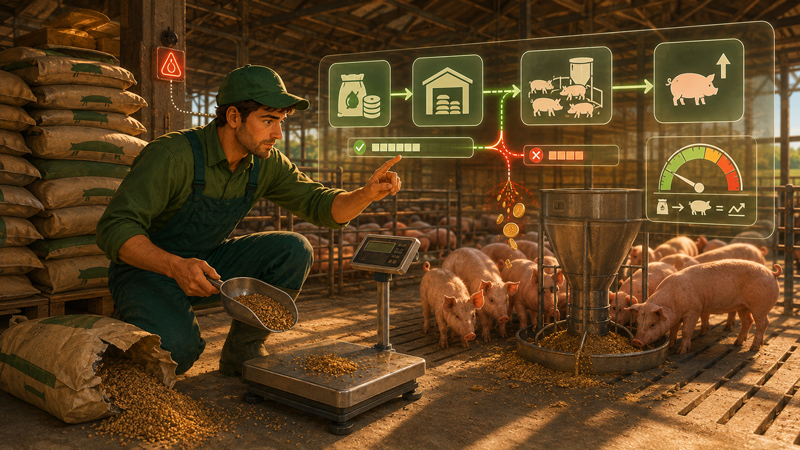
Review costs across the breeding cycle rather than focusing on the price of an individual dose. Include reproductive products, consumables, labour and repeat work, then assess those costs alongside production outcomes.
The financial question is whether the farm uses its resources more effectively to produce piglets.
How Pigax helps connect breeding activity to outcomes
Reliable evaluation starts with records that remain useful after the breeding day has passed. Pigax helps farmers maintain the breeding, pregnancy, health and expense information needed for that review.
1. Keep mating and pregnancy confirmation separate
Pigax allows farmers to register mating or insemination through the Pregnancy Monitor and confirm pregnancy later. This distinction keeps an attempted breeding from being treated as a confirmed result.
Keeping these statuses current helps the team see which animals have been bred and which pregnancies have been confirmed.
2. Plan breeding cycles with the Gestation Calendar
Pigax’s Gestation Calendar helps you plan staggered breeding cycles using your sow numbers, start date, preferred interval between insemination groups and grow-out period. It accounts for gestation, lactation and recovery periods when planning sow availability. This helps spread expected farrowing and sales dates across the year, making it easier to organise labour, housing and production. Use the schedule as a planning guide, then adjust breeding decisions to each sow’s actual condition and readiness.
3. Track progress through to farrowing
The pregnancy overview brings together the sow, mating date, farrowing date and pregnancy status. Recording farrowing and litter details helps build a reproductive history that can inform future decisions.
Instead of reviewing breeding activity in isolation, the farm can follow the recorded cycle through to its outcome.
4. Maintain health and cost records
Medication and treatment histories provide useful context when reviewing reproductive performance with a veterinarian. Farm expense records help keep the costs of management decisions visible.
These records support a structured investigation. They do not, by themselves, prove why performance changed. Maintain any additional information required for your breeding evaluation, including precise protocol timings and labour measurements, alongside your Pigax records.
Improve one breeding group before changing the whole herd
A controlled introduction is more informative than an immediate farm-wide change. Establish your baseline, select suitable animals with veterinary guidance and agree in advance on what success will look like.
Compare groups carefully. Differences in season, parity, health and animal condition can influence the result. Avoid drawing firm conclusions from a small group or a single breeding cycle.
The objective is to build a programme your team can repeat and your records can explain.
Start with your next breeding group. Record each mating in Pigax, update pregnancy confirmations, complete farrowing records and keep related expenses current. Use those results to guide your next decision.
Inspired by the discussion of ovulation control and timed insemination on The Swine it Podcast Show featuring Rick Schoenbeck. Reproductive treatments and insemination protocols should follow veterinary guidance and the applicable local product label.